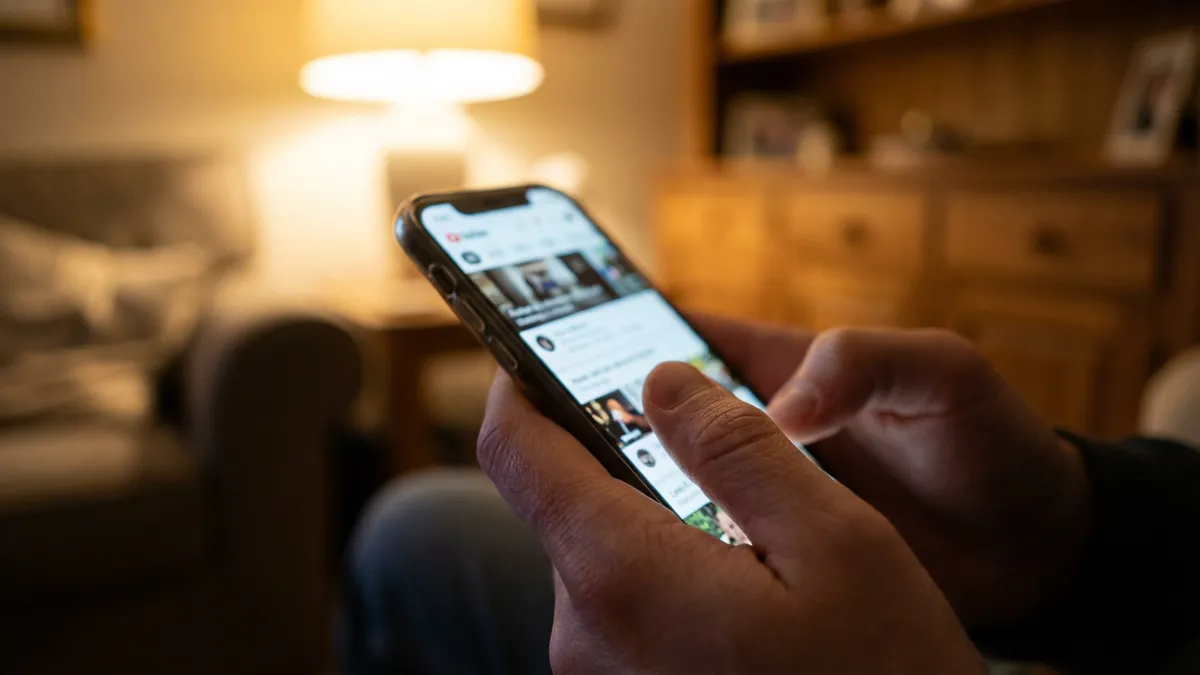
Social Media Died. Interest Media Replaced It. Most Local Businesses Have Not Noticed Yet.
·
The Shift Nobody Told You About
Something fundamental changed in social media over the past 18 months, and the vast majority of local businesses — the accountants, the dentists, the personal trainers, the restaurants, the solicitors, the wedding photographers — are still operating as though it didn't happen.
They're posting. They're using hashtags. They're running the same strategy they were told worked in 2021. And they're watching their reach quietly collapse while wondering what they're doing wrong.
The answer is: nothing wrong, exactly. The problem is that the game they're playing no longer exists.
Social media — the version where you built a following, posted content, and your followers saw it — is effectively dead. What replaced it is something the industry is now calling interest media. And the difference between the two is not a minor algorithm tweak. It is a complete structural shift in how content gets distributed, who sees it, and why.
Gary Vaynerchuk, who has been studying digital platforms since before most businesses had a Facebook page, put it bluntly in early 2026: "Social media is dead. Interest media is here."
If you run a local business and you depend on social media to build trust, generate enquiries, and stay visible in your community — this article is the most important thing you'll read this year. Not because I wrote it. Because the data behind it will change how you think about every post you make from today forward.
What "Interest Media" Actually Means (And Why It Changes Everything)
Here's the shift in one sentence: the algorithms no longer primarily show your content to people who follow you. They show your content to people who are interested in what you're talking about.
That might sound like a subtle distinction. It is not.
Under the old model, social media worked like an email list. You built followers. You posted. Your followers saw it. Growth meant getting more followers. Strategy meant posting consistently and hoping the algorithm would show your content to the people who'd already opted in.
Under the new model — the one running right now across Facebook, Instagram, TikTok, and increasingly LinkedIn — the algorithm works like a matchmaker. Every time you post, an AI system evaluates your content and asks: "Who in the entire network would find this genuinely interesting?" If the answer is "a lot of people," the content gets distributed to them — whether they follow you or not.
The numbers are staggering. According to current platform data from Cloudix Digital and Meta's own engineering disclosures, over 50% of content in the average Facebook News Feed now comes from accounts the user does not follow. On TikTok, that figure is significantly higher. Instagram's Explore page and Reels feed operate almost entirely on this interest-based distribution.
What this means for a local business is transformative, and most haven't grasped it yet:
A plumber with 400 followers can have a single piece of content shown to 10,000 people in their area — if the content is genuinely relevant and useful to the interest group the algorithm identifies. A dentist with a modest Facebook page can reach more potential patients organically than they could with a paid billboard — if they understand what the algorithm is actually looking for.
The playing field has never been flatter. But only for those who understand the new rules.
The Psychology of Why People Stop Scrolling
Before we talk about algorithms and tactics, we need to talk about brains. Because every algorithm is ultimately trying to do one thing: predict human behaviour. And if you understand the psychology of why a human stops scrolling, saves a post, shares it to a friend, or follows an account — you don't need to "hack" any algorithm. You just need to be genuinely useful to humans, and the algorithm will reward you for doing its job.
There are specific psychological mechanisms that drive every meaningful action someone takes on social media. Understanding them is the difference between content that performs and content that disappears.
The first is reciprocity. When someone gives you something of genuine value — a useful tip, an honest answer, information that saves you time or money — you feel a natural, unconscious pull to return the favour. This is why the most effective local business content strategy is radical generosity: give away your expertise freely, answer questions nobody else will answer, be the most helpful voice in your industry within your area. The businesses that give the most freely build the strongest pull toward them when someone actually needs the service.
The second is the power of what happens before the ask. The psychological state someone is in when they encounter your business determines whether they trust you. If they've consumed six months of your helpful, honest, human content before they ever need your service — the trust is already built. The sale is not a moment of persuasion. It is the natural conclusion of a trust relationship that your content has been quietly building.
The third is why certain content spreads and other content dies. Research from Wharton professor Jonah Berger, author of Contagious: Why Things Catch On, identified six drivers of virality. Content spreads when it makes the sharer look good or knowledgeable (social currency). When it's linked to something people encounter in daily life (triggers). When it activates high-energy emotions — awe, humour, surprise, even anxiety — rather than passive emotions like mild contentment (emotion). When it offers genuine practical value that's worth passing along. And when it's wrapped in a story rather than presented as dry information.
For a local business, this means: a roofer telling the story of the worst roof they ever saw — and what the homeowner could have spotted early — will get shared to neighbours. A bullet-point list of "5 Roofing Tips" will not. The story makes the sharer look helpful. The list makes them look like they're forwarding spam.
The fourth is why some posts get engagement and others don't — even when the content seems similar. Stanford researcher B.J. Fogg's behaviour model explains that any action requires three things to converge at the same moment: the person must be motivated (the content is relevant or emotionally resonant), the action must be easy (a simple comment, a quick share), and there must be a clear prompt (an invitation to act). When engagement is low on a post, at least one of these three is missing. This is more useful than "try harder" because it tells you exactly what to diagnose.
The fifth — and for local businesses, the most powerful — is the parasocial relationship. This is the psychological phenomenon where someone feels they "know" a person through one-sided exposure to their content. When a business owner shows up consistently on video — sharing their expertise, being honest about their work, showing the real behind-the-scenes moments — the audience builds a genuine relationship with that person. They feel familiar. Trusted. Like someone they'd feel comfortable calling.
This is the most powerful trust mechanism available to local businesses on social media. A solicitor who shares two-minute videos explaining common legal misconceptions every week will, over three to six months, become the person people feel they "know." When they need legal help, that solicitor isn't a stranger on a Google listing. They're a familiar, trusted presence.
None of these psychological principles are new. What's new is that the algorithms are now specifically designed to identify and amplify content that triggers these responses. The platforms want people to stay engaged, and content that leverages these principles keeps people engaged. When you create content that is genuinely useful, emotionally resonant, and built for human psychology — you're not fighting the algorithm. You're doing exactly what it wants, and it rewards you for it.
How the Algorithms Actually Work Right Now
Let's get specific. If you're going to build a strategy, you need to know what the machines are actually measuring.
Facebook (Still the Primary Platform for Local Businesses)
Facebook's algorithm is now powered by an AI system Meta internally calls "Andromeda." It has evolved far beyond the old model of showing posts from friends and pages you follow. It is a prediction engine that evaluates every piece of content and asks: "Will this specific person find this genuinely valuable?"
According to detailed analysis from Omnichat and multiple algorithm breakdowns published in early 2026, Andromeda evaluates content against three core pillars:
Relationship Signals. How often does someone interact with your page? Do they DM you, comment on your posts, tag you, visit your page directly? The stronger the existing interaction history, the more the algorithm fast-tracks your content to that person. This is why replying to every comment — quickly — is not just good manners. It is a direct ranking factor.
Engagement Quality. This is where the old playbook collapses entirely. A single share — especially a share via private message, Messenger, or WhatsApp — is now worth more than fifty basic likes. A save signals high value. A long, thoughtful comment (the algorithm now measures comment length) is worth dramatically more than a one-word reaction or emoji. The algorithm is not measuring how many people reacted. It is measuring how deeply people engaged. Quality has replaced quantity as the metric that matters.
The Golden Hour. The first sixty minutes after you post are a testing window. The algorithm shows your content to a small sample of your most engaged audience. If they engage meaningfully — comments, shares, saves, extended watch time on video — the algorithm pushes the content to a wider "discovery" group that includes people who don't follow you at all. If the sample doesn't engage, the content is effectively buried. This means posting when your audience is online and being actively present to respond to comments during that first hour is not optional. It is the single most actionable thing you can do to increase organic reach.
There are several other Facebook-specific behaviours every local business needs to know:
Facebook is now a search engine. It uses natural language processing to read your captions and video transcripts. If someone searches "best plumber in Derby" on Facebook, and your content includes those terms naturally, the algorithm can surface you. This is called social SEO, and it is replacing hashtags as the primary discoverability mechanism.
External links in post captions suppress your reach. Facebook wants people to stay on Facebook. If you need to link to your website, put the link in the first comment — not the caption.
Engagement bait is algorithmically penalised. "Comment YES if you agree" and "Tag a friend" are detected and suppressed. Open-ended questions that invite genuine, thoughtful responses are rewarded.
Facebook Groups get massively better organic reach than Business Pages. The algorithm treats Groups as high-trust environments. A local business that runs a community Group — not a promotional Group, a genuinely useful one — gets preferential algorithmic treatment.
Instagram runs multiple algorithms, not one. The Feed and Stories algorithm prioritises relationship strength — how often someone interacts with you directly. The Explore page algorithm is pure discovery — it surfaces content to people who don't follow you, based on what similar users engage with. The Reels algorithm optimises for entertainment — watch time, rewatches, and shares.
As HeyOrca's 2026 algorithm breakdown explains, the most important signals on Instagram are now watch time (for video), saves, shares, and comment depth. Likes are the weakest signal. The platform reads caption text using NLP for search categorisation — keyword-rich captions now drive more discoverability than hashtags.
For local businesses: Reels are the best tool for reaching new people. Carousels are the best tool for building trust with existing followers. Both should be used strategically — Reels to attract, carousels to deepen.
TikTok
TikTok's algorithm optimises for what it calls "durable attention." Completion rate — whether people watch the video to the end — is the single most important metric. A fifteen-second video that most people finish will vastly outperform a sixty-second video that people skip halfway through. The first three seconds are make-or-break.
For local businesses, TikTok is an opportunity to reach people who would never find you otherwise — but the content must feel native to the platform. Overly corporate or promotional content fails immediately. Personality-driven, educational, or entertaining content that happens to come from a business is what succeeds.
LinkedIn still has the strongest organic reach of any major platform, despite a roughly 50% year-over-year decline reported across multiple sources in early 2026. The algorithm now heavily rewards expertise and authentic professional insight. Personal stories with professional lessons consistently outperform polished corporate content.
For local businesses, LinkedIn works best as a personal brand strategy for the business owner — not the company page. People engage with people, not logos.
The Trust Equation: 7 Hours, 11 Touchpoints, 4 Locations
Here is the single most important piece of data in this entire article.
Research — often attributed to Google's own analysis of consumer behaviour — found that before someone trusts a business enough to buy from them, they typically need seven hours of cumulative exposure to that brand, across eleven separate touchpoints, in four different locations or formats.
Read that again. Seven hours. Eleven touchpoints. Four locations.
For a local service business — where the customer has to trust you before they'll hand you their money, their home, their health, their legal situation — this is the entire game.
No single social media post will make someone trust you. But a body of work — three to six months of consistently helpful, honest, human content — will. Every video they watch is ten seconds toward those seven hours. Every post they see is a touchpoint toward eleven. Every platform they encounter you on is a location toward four.
This is why we keep saying: content is not marketing. Content is trust architecture. Every piece you publish is a brick in a structure that eventually becomes unassailable.
And this is why the businesses that post generic, promotional, "book now" content three times a week are invisible. They're not building anything. They're throwing individual bricks into a field. A trust structure requires intention, consistency, and the understanding that no single piece does the job — but together, over time, they become the reason someone chooses you over every other option.
The Five Stages of a Customer Who Doesn't Know You Exist Yet
The biggest strategic mistake local businesses make with their content is assuming everyone in their audience is ready to buy.
Legendary copywriter Eugene Schwartz, in his book Breakthrough Advertising, identified five stages of customer awareness that explain why most marketing messages fail: they're talking to people who aren't ready to hear them.
Stage 1 — Unaware. They don't even know they have a problem. A homeowner with a slowly deteriorating roof has no idea there's an issue. A person with gradually worsening posture doesn't know they need a physiotherapist. Content for this stage is about revealing problems people don't know they have — educational, eye-opening content that makes someone think, "Wait, that might be me."
Stage 2 — Problem Aware. They know something is wrong but don't know what solutions exist. They know their back hurts but don't know whether they need a physio, a chiropractor, or a new mattress. Content for this stage educates on options, approaches, and what to consider.
Stage 3 — Solution Aware. They know solutions exist but haven't chosen a provider. They know they need a physiotherapist but haven't decided which one. Content for this stage demonstrates your specific expertise, philosophy, and approach.
Stage 4 — Product Aware. They know your business exists but haven't committed. They follow you, they've seen your content, but they haven't booked. Content for this stage provides the final trust signals — testimonials, case studies, behind-the-scenes, direct invitations.
Stage 5 — Most Aware. They're ready. They just need the nudge. A clear offer, a direct call to action, a reason to act now.
Here's the problem: most local businesses create content exclusively for Stage 5. "Book now." "Call today." "20% off this month." That content reaches maybe three percent of their potential audience — the tiny fraction who happen to be ready at that exact moment.
The massive opportunity — the one almost no local business is exploiting — is in Stages 1, 2, and 3. That's where the audience is largest, competition is lowest, and trust is built most powerfully. A local business that creates content across all five stages doesn't just market better. They become the trusted authority that people think of automatically when they eventually reach Stage 5.
Roughly 70-80% of your content should be aimed at the first three stages. Only 20-30% should be direct calls to action. This ratio feels backwards to most business owners, but it is the ratio that builds the trust foundation the entire strategy depends on.
The Content That Actually Builds Trust (It's Not What You Think)
!Small business owner filming authentic video content on a smartphone tripod in their real workplace
If the old "social media" playbook was about posting polished content consistently and growing followers, the new "interest media" playbook is about something different entirely: becoming the most helpful, transparent, and human voice in your category within your local area.
Marcus Sheridan, author of They Ask, You Answer, built a swimming pool company into the most-visited pool website in the world — not through advertising, but through one obsessive strategy: answering every single question his customers were typing into Google. Especially the uncomfortable ones. Especially the ones his competitors avoided.
The five types of content that build the most trust for local businesses are:
Pricing and cost content. What does it cost? Why does it cost that? What affects the price? Almost no local business addresses this openly online. The one that does becomes the trusted authority — because the willingness to be transparent about money signals honesty about everything else.
Problems and downsides content. What can go wrong? When is this service not the right fit? What should you watch out for? Counter-intuitive as it sounds, a business that openly discusses the limitations and risks of their own service builds far more trust than one that only talks about how great they are.
Comparison content. How do you compare to alternatives? What should someone look for when choosing? A business that helps customers make a genuinely informed decision — even if that decision might not be to choose them — positions itself as the guide, not the salesperson.
Proof content. Real customer stories, before-and-afters, testimonials, case studies. Not polished corporate testimonials — real, human, specific accounts of what the experience was actually like. We wrote about this in detail in our article on why raw, authentic content outperforms polished production — the same principle applies here.
Pure education content. Freely teach everything you know. Show people how to do it themselves. Explain the process. Reveal the industry secrets. The businesses that give away their expertise most generously are the ones that build the strongest position. Most people will still hire the professional — but now they'll hire the one who proved they actually know what they're talking about.
The Uncomfortable Truth About Your Current Strategy
Here is where I need to be direct, because this is what I see with almost every local business that comes to us.
You are posting content that nobody asked for, that the algorithm doesn't want to distribute, that doesn't map to any stage of your customer's awareness journey, and that builds no meaningful trust.
Your captions follow a formula from 2020 — hook, a few marketing lines, some bullet points, a call to action. Algorithms detect this formulaic pattern now. Audiences scroll past it instinctively. It reads as marketing, and in 2026, content that reads as marketing is invisible.
Your content positions your business as the hero — "We've been in business for 20 years," "Look at our amazing work," "We're so excited to announce." Nobody cares. The customer is the hero of their own story. They have a problem. They need a guide who understands that problem. Donald Miller's StoryBrand framework has been making this point for years, and it is more true now than ever: the moment your content becomes about you instead of about the person reading it, you have lost them.
Your posting frequency is either too high (daily mediocre content that dilutes your reach and causes follower fatigue) or too low (sporadic bursts that never build algorithmic momentum). Research across multiple platforms consistently shows that 3-5 high-quality posts per week outperforms daily posting of average content.
And your strategy has no architecture. No content pillars. No awareness stage mapping. No positioning. No intentional trust-building arc. You are throwing individual posts into the void and hoping something sticks.
That is not a strategy. That is a lottery ticket purchased five times a week.
What to Do Starting Monday
You don't need to overhaul everything overnight. But you do need to start making decisions differently. Here's what actually matters:
First, get your positioning clear. Before you write another caption, answer this question: What makes your business the obvious choice for a specific type of customer? Not "we're professional and friendly" — every competitor says that. What is genuinely different about you? What do you believe about your industry that most people would disagree with? If you can't articulate your positioning in two sentences, your content will be unfocused, and unfocused content is content the algorithm cannot categorise. We wrote about how disjointed branding creates a "Frankenstein" problem that costs businesses up to 33% in revenue. Unfocused content is the social media version of the same disease.
Second, define two to three content pillars. These are the core themes your content will be organised around. Each pillar should serve a purpose in the trust-building journey. A local physiotherapist might have: "Understanding Your Body" (educates Unaware and Problem Aware people), "Treatment and Recovery" (serves Solution Aware and Product Aware people), and "Inside the Clinic" (builds parasocial familiarity across all stages). Stick to these pillars religiously. The algorithm scans your last nine to twelve posts to determine your account's identity. If your content is scattered across too many topics, the AI cannot categorise you, and your distribution suffers.
Third, put a face on the business. This is non-negotiable for local service businesses. The owner or a key team member needs to show up on camera. Not polished. Not scripted. Talking directly to camera about something they genuinely know. The algorithms reward it. The psychology rewards it. The trust rewards it. If you are uncomfortable on camera, start with fifteen-second videos answering one common customer question. You will get better. The discomfort is temporary. The trust it builds is permanent.
Fourth, optimise for the right engagement signals. Stop trying to get Likes. Start creating content that gets saved (because it's useful enough to reference later), shared via DM (because it's relevant enough to send to a friend), and commented on in long, thoughtful replies (because it sparked genuine conversation). These are the signals every major platform algorithm now weights most heavily.
Fifth, be present in the Golden Hour. Post when your audience is most active and be available for the first sixty minutes to reply to every comment. This single behaviour — replying quickly and substantively to every comment in the first hour — is one of the highest-leverage actions you can take for organic reach.
Sixth, think beyond your own page. Join and contribute to local Facebook Groups. Comment helpfully on other people's posts. Answer questions from strangers in community spaces. Collaborate with complementary local businesses on shared content. The most underused organic growth strategy for local businesses is simply being useful in spaces where potential customers already spend time.
A Final Note
The businesses that will dominate their local markets over the next two to three years are not the ones with the biggest ad budgets. They are not the ones posting the most frequently. They are not even the ones with the best-looking content.
They are the ones that understand something most businesses still don't: trust is the strategy. Not a byproduct of strategy. Not a nice-to-have. The strategy itself.
Every post, every video, every comment, every Story, every reply — they are all deposits in a trust bank. And the businesses that make enough deposits, consistently, over months, across formats and platforms and conversations — they become untouchable. Not because they're louder than their competitors. Because they've spent six months being genuinely helpful while their competitors were still trying to figure out which hashtags to use.
The algorithm isn't your enemy. It is a matchmaker that wants to connect useful content with the people who need it. Give it something genuinely useful, and it will do the distribution work for you.
Social media is dead. Interest media is here. And it rewards exactly what local businesses should have been doing all along: being the most trusted voice in the room.
At Wonderworks, we build social media strategies for local businesses that are grounded in psychology, architecture, and trust — not templates and hashtags. If you've read this far and something has clicked, get in touch. The conversation is free and there's no obligation.