The Billion-Dollar Visual Advantage Is Now Within Every Brand's Reach
In 2026, image and video tools like Midjourney, Google's Nano Banana, Kling and Runway let any business make brand-grade stills and short videos in an afternoon, work that used to need a studio, a crew and weeks of production. Budget is no longer the thing that decides how your brand looks.
The Barrier That Protected the Powerful Just Collapsed
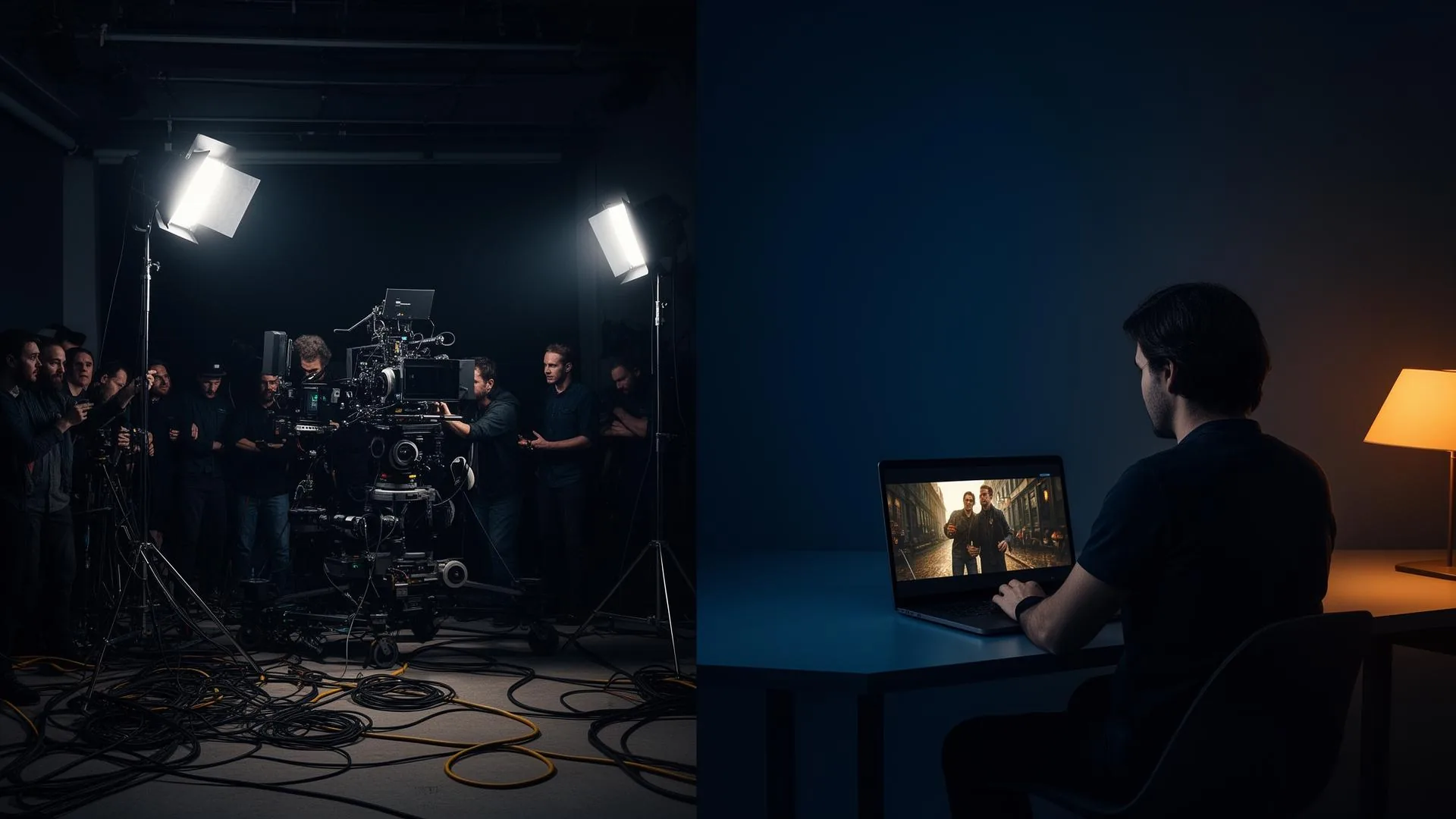
There is a moment in the history of every major industry where the barrier that protected the powerful suddenly collapses. Where the thing that separated the big from the small, the expensive from the affordable, the professional from the amateur, simply ceases to exist.
That moment has happened in visual marketing, and it happened quietly.
For one hundred years, from the first printed advertisement to the first television commercial to the first Instagram campaign, the quality of your brand's visual identity has been a direct function of your budget. Not your talent. Not your ideas. Not the quality of your product. Your budget.
Nike looks like Nike because it spends a fortune making it look like that. The gap between a world-class brand visual and a local business visual has never been about creativity. It has always been about access to the tools, the studios, the crews, the post-production pipelines, and the time that only serious money could buy.
The gap in the tools is gone. What's left is the gap in ideas and direction, and that one was never about money.
In 2026, a business owner with a laptop, an internet connection and a monthly subscription can produce product imagery, brand campaign visuals and short cinematic video that, a couple of years ago, only a studio could deliver.
The question is no longer whether you can access these tools. The question is whether you're using them, or whether a competitor gets there first.
What Just Changed, And Why It Happened So Fast
The speed of this shift is what makes it difficult to process. Two years ago, AI-generated images were a curiosity, interesting experiments that a trained eye could spot instantly. Slightly wrong hands. Blurred backgrounds. That uncanny feeling that something was off.
That era is over with a completeness that should stop you in your tracks.
The models available in 2026 are not small improvements on what came before. They work at a completely different level, and the pace of development is not slowing down. Between March and September 2026 alone, Midjourney, Google, OpenAI, ByteDance and Kuaishou all released major new versions, and OpenAI shut one of its best-known tools down.
The Image Generation Tools That Matter Now
Nano Banana 2 and Nano Banana Pro (Google)
Google launched Nano Banana 2, built on Gemini 3.1 Flash Image, on 26 February 2026, and it became the default image model across Google's apps. It makes images from 512px up to 4K in different shapes, and it can keep up to five characters and fourteen objects consistent across a piece of work, which matters when the same product or person has to look the same in every image. Nano Banana Pro is still there on Google's higher plans for the most demanding jobs.
What this means in practice: you can make a product campaign image at 4K, close to what a studio shoot would give you, in seconds, from a written description and a photo of your product.
Midjourney
Still the benchmark for artistic quality and brand aesthetics. Its current model, V8.2, came out on 24 July 2026 with a focus on image quality and personalisation, and it works in the browser as well as on Discord. If you want visuals that have genuine creative personality, a consistent mood, a distinctive colour world, a sense of visual authorship, Midjourney remains the tool that professional designers reach for first. It doesn't prioritise photorealism above all else. It prioritises beauty. For brand identity work, campaign visuals, and anything where the feeling of an image matters as much as its technical accuracy, it is very hard to beat.
Flux (Black Forest Labs)
Built for creators who want control over style. Where other models prioritise realism, Flux 2 Pro prioritises personality. It handles stylised compositions, brand-specific aesthetics, and abstract creative directions better than most. Black Forest Labs opened early access to FLUX 3 on 23 July 2026, a single model that makes images, video and sound together, so expect this one to change again soon.
Seedream 5.0 Pro (ByteDance)
ByteDance, the company behind TikTok, has quietly built one of the most capable image generation stacks on the planet. Seedream 5.0 Pro, released on 8 July 2026, lets you mark a precise area of an image and change only that part, and it handles dense layouts like infographics and text in many languages. For e-commerce brands producing product variations, social content at scale, or regular marketing assets, it is built for exactly that kind of volume.
GPT Image 2 (OpenAI)
Not just an image generator, a visual reasoning system. OpenAI released it in April 2026 as ChatGPT Images 2.0, available to every ChatGPT user, with a "thinking" mode on paid plans that plans the image, checks its own output and can make up to eight matching images from one request. It is strong on small text, diagrams and busy layouts. For businesses that need to adapt, refine, and evolve visual assets rather than simply create new ones, GPT Image 2 adds a layer of intelligence that purely generative models don't.
The Video Generation Tools That Matter Now
If the image generation story is remarkable, the video generation story is something else entirely.
A traditional brand video means a production company, a crew, locations, talent, equipment hire, directing, editing and sound, and weeks between the brief and the finished film. That is exactly the work these tools now compress into a desk and a laptop.
Kling 3.0 (Kuaishou)
Launched on 6 February 2026, Kling 3.0 makes clips of up to 15 seconds from text prompts or image references, with native audio in multiple languages and accents. In June 2026 Kuaishou added Kling 3.0 Turbo, a faster version with sound and improved lip sync for social clips and talking-head videos, and upgraded Kling Omni to edit video in 4K.
In plain terms: you can make a short brand video with sound from a written description or from your own photos, and then edit it shot by shot.
Google Gemini Omni
Veo 3.1 built Google's name for cinematic AI video, and at I/O on 19 May 2026 Google added Gemini Omni, a model that makes and edits video from any mix of text, images, video and voice. It understands physics well enough to make movement look real, it keeps characters and voices consistent from scene to scene, and every video carries Google's invisible SynthID watermark. It's in the Gemini app and Google Flow for Google AI subscribers, and free to try in YouTube Shorts Remix and the YouTube Create app.
Seedance 2.0 (ByteDance)
Released in February 2026. Seedance 2.0 generates video complete with sound effects and dialogue from text prompts, using images, audio, and video references to give creators control over performance, lighting, and environment.
Runway Gen-4.5
The professional's editing tool. Beyond generation, Runway excels at extending existing footage, modifying shots, replacing elements within video, and integrating AI-generated content with traditionally filmed material. For brands that have existing video assets and want to extend, enhance, or repurpose them, Runway sits in a category of its own.
What This Actually Costs
Let's be completely direct about what has changed, because this is where the reality becomes impossible to ignore.
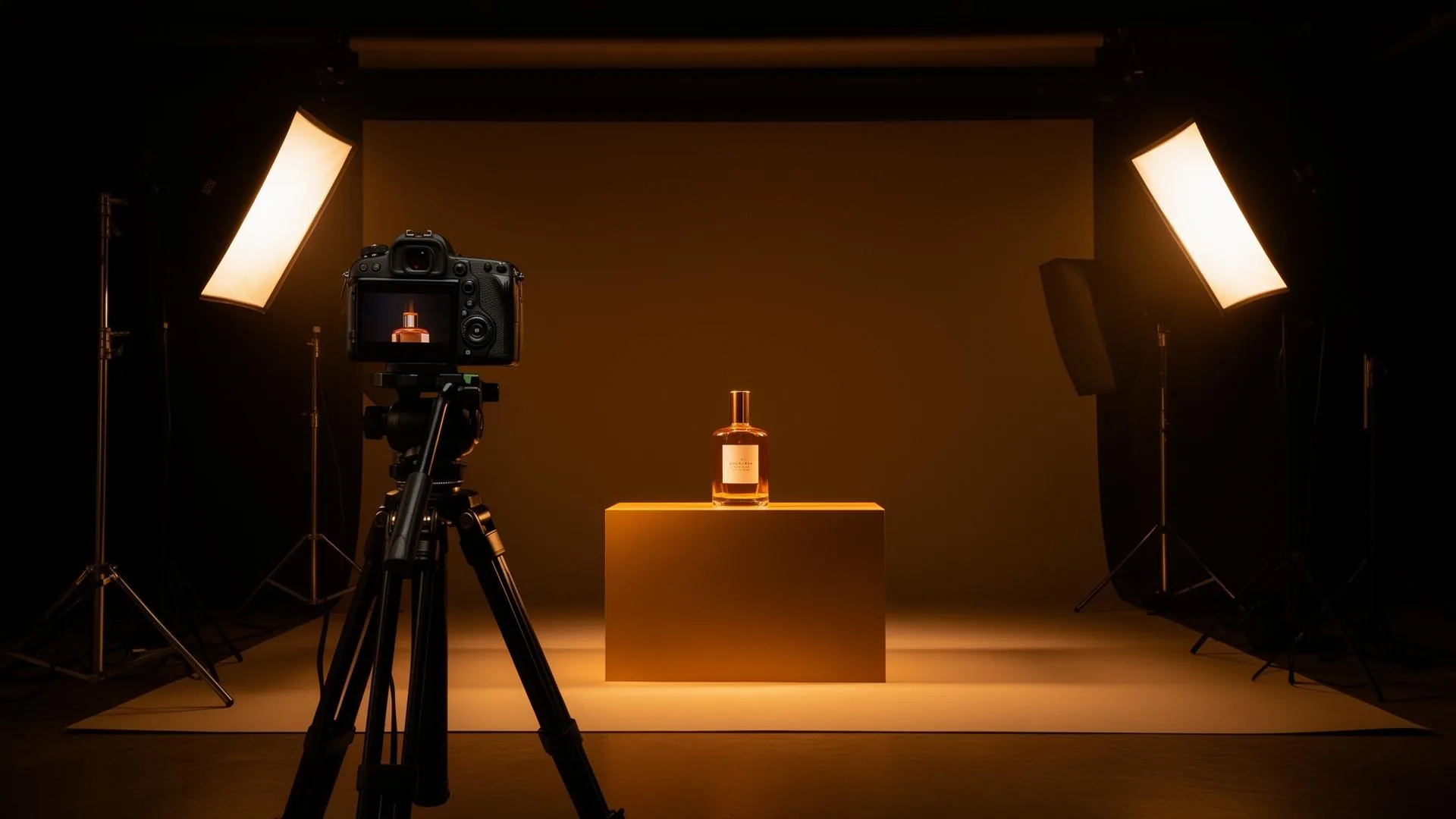
A traditional product photoshoot means booking a photographer and a studio, then adding location, styling, talent, and post-production, and the bill climbs with every one of them. A traditional brand video takes weeks from brief to delivery and means coordinating photographers, directors, editors, sound designers, and production companies.
Now here's the other side of that comparison. Most of the tools above have a free tier or a free trial, and their paid plans are monthly subscriptions you can start and stop. Their prices change often, so check each tool's own pricing page before you commit. What you really pay with is time: the hours it takes to learn a tool and the thought that goes into directing it.
When the cost of making a good image falls this far, a brand that looks amateur is usually short of time or direction, not money.
The Honest Part, What This Doesn't Replace
It would be dishonest to present this as effortless magic that requires nothing of you, so let's be straight.
These tools are extraordinarily capable. They are not autonomous. The quality of the output is still a direct function of the quality of the creative direction going in. A poor prompt produces a mediocre image at 4K resolution. A thoughtful, specific, strategically informed prompt produces something exceptional.
The skill that the professional photographer spent years developing, understanding light, composition, mood, narrative, the relationship between visual elements, doesn't disappear in importance. It shifts. It moves from executing the shot to directing the generation. The creative director is more important than ever. The camera operator is less relevant.
Tools also come and go. OpenAI's Sora 2 Pro was on this list in March, and on 24 March 2026 OpenAI announced it was shutting down the Sora app and its API. Build your process around your brand and your ideas, not around one tool.
The tools gave everyone access to a world-class studio. You still need to know what you want to shoot.
What This Means for Your Brand Right Now
Here is the practical implication that every business owner reading this needs to sit with.
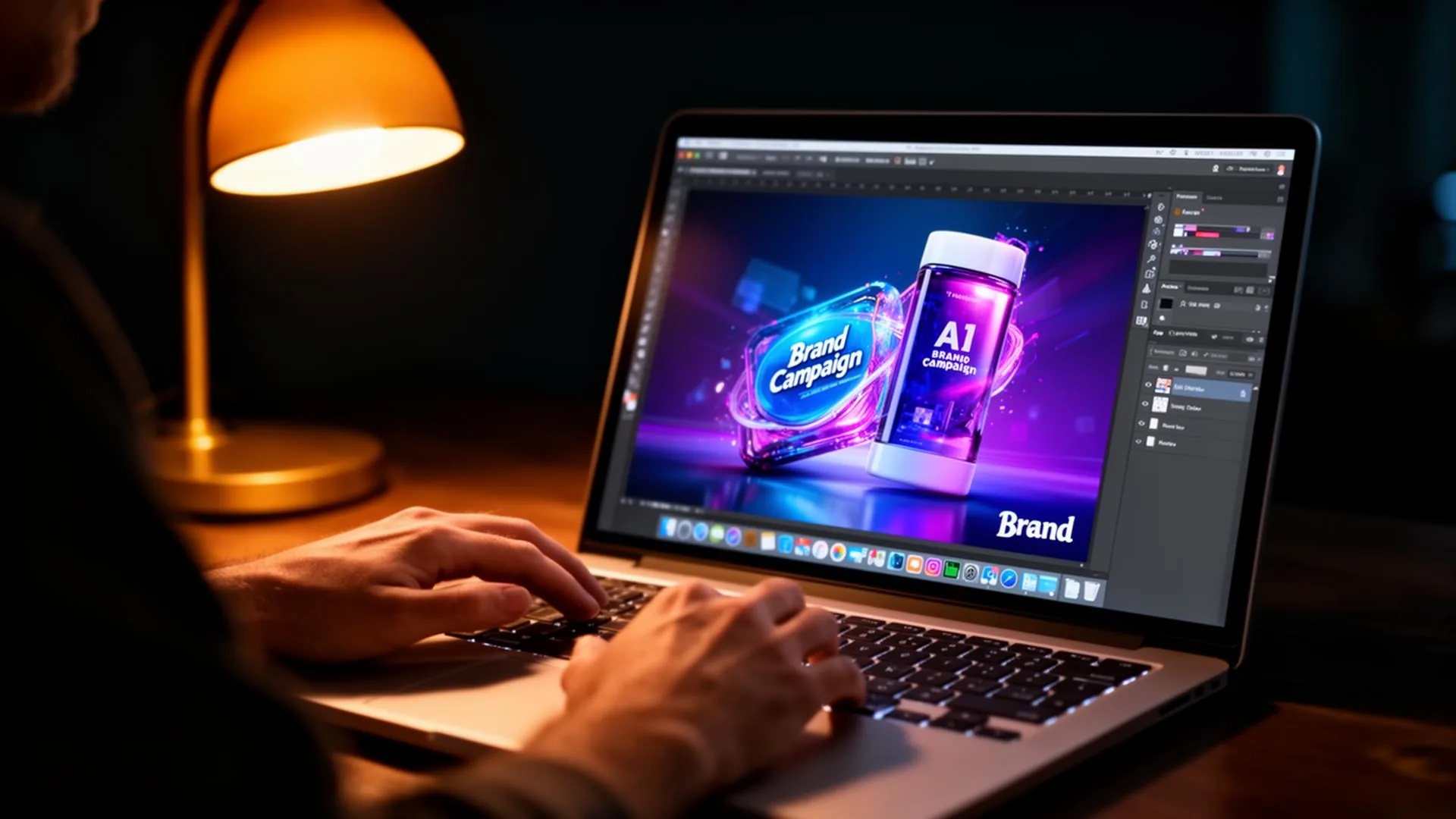
Your competitors, at least some of them, already know this. They are producing content right now that looks like it cost far more than it did. Their social media looks like a global brand. Their product visuals look like a studio campaign. Their brand videos look cinematic.
The visual gap that you might have accepted as a natural function of your size and budget, "we're not a big brand, we can't look like Nike", is no longer a gap that budget creates. It is a gap that knowledge and action create.
- If your product photos were taken on a phone in bad lighting, that's fixable now, without a studio.
- If your website still uses generic stock photography, you can have images made for your own brand instead.
- If you've never made a brand video because you assumed you couldn't afford it, that assumption is worth checking again.
Where to Actually Start
If you're new to these tools, the learning curve is real but manageable. Here is the most direct path from zero to producing professional-quality visual content:
Start with Midjourney for brand imagery. Sign up at midjourney.com, work in the browser, and spend a week learning how to write prompts that produce consistent results. The output, when directed well, is good enough for most of what a small brand needs day to day.
Add Kling 3.0 for video. Try it at klingai.com before you pay for anything. Generate short brand clips from your best Midjourney images using image-to-video mode. The result, a polished short brand video made from your own visual assets, is the kind of content that previously required a production company and a significant budget.
Explore Nano Banana 2 for product-accurate commercial imagery. It is built for precision: if you need an image to match a specific brief rather than interpret it creatively, Nano Banana 2 is one of the most reliable tools for commercial-quality output right now.
As your confidence grows, start combining them. Generate a base image in Midjourney for its visual character. Refine the composition and accuracy in Nano Banana. Animate it in Kling. Add sound in Kling or Seedance. You now have a complete production pipeline that, not long ago, would have required a team of specialists and a budget to match.
Today one person can do it in an afternoon.
One Final Thought
We are living through the first moment in the entire history of commercial marketing where the visual quality of a brand's output depends more on its ideas and direction than on its budget.
The implications of that are still working their way through every industry, every market, every competitive landscape. The brands that understand what just happened and act on it will look back on this period as the moment they stopped looking like what they were and started looking like what they wanted to become.
The brands that don't will look back and wonder why they kept losing ground to competitors they used to dismiss.
The tools exist, and most of them you can try today.
What you do with that is entirely up to you.
Questions about any of this? Get in touch.
Questions
What AI image and video tools are worth using in 2026?
+
For images in 2026: Midjourney (version 8.2, July 2026), Google's Nano Banana 2, OpenAI's GPT Image 2 and ByteDance's Seedream 5.0 Pro. For video: Kling 3.0, Runway Gen-4.5, ByteDance's Seedance 2.0 and Google's Gemini Omni. OpenAI's Sora is no longer an option, because OpenAI announced on 24 March 2026 that it was shutting the Sora app and API down.
Is AI content bad for a brand?
+
AI content that looks generic or fake is bad for a brand. AI image and video tools used for storyboards, product shots, background plates, cutdowns and quick variations can help a small brand look its best, as long as a person still owns the story, the words and the final call.
What do AI image and video tools cost a business?
+
Most of the main AI image and video tools, including Midjourney, Kling and Google's Nano Banana, have a free tier or free trial and paid monthly plans, and their prices change often, so check each tool's own pricing page before committing. The bigger cost is the time it takes to learn them and the creative direction that makes the output good.
Will using AI tools hurt my SEO or reach?
+
Google says appropriate use of AI or automation to make content is not against its guidelines, and what it rewards is helpful, original content. The risk is thin content that adds nothing: Google's July 2026 guide to its AI features warns against content that "could easily be produced by a generative AI model", so keep your own story, products and people at the centre.
Sources
- TechCrunch: Google launches Nano Banana 2 model with faster image generation, 26 February 2026
- Midjourney documentation: model versions
- Black Forest Labs: FLUX 3, 23 July 2026
- IT Brief: OpenAI launches ChatGPT Images 2.0 with API access, April 2026
- Kling AI 3.0 launch announcement via Bernama, 6 February 2026
- Google: 100 things we announced at I/O 2026, 19 May 2026
- Engadget: OpenAI is shutting down its Sora video generation app, 24 March 2026
- Google Search Central Blog: Google Search's guidance about AI-generated content, 8 February 2023
- Google Search Central: Optimizing your website for generative AI features on Google Search, last updated 10 July 2026